



NOTE: this article is FREE because I don’t like to see Peanuts fans get ripped off. Please spread the word! Also, help support articles about Peanuts memorabilia by becoming a member. Thank you!
This post contains affiliate links that may earn me a small commission. Thank you for supporting CollectPeanuts.com and my research.
What Peanuts-loving fan doesn’t want a piece of rare Snoopy bling? Even though I’m not a fan of wearing jewelry, I still wouldn’t mind getting my hands on a precious Cartier Snoopy charm. I keep an eye out for them… dreaming… yet never buying.
The Cartier Snoopy
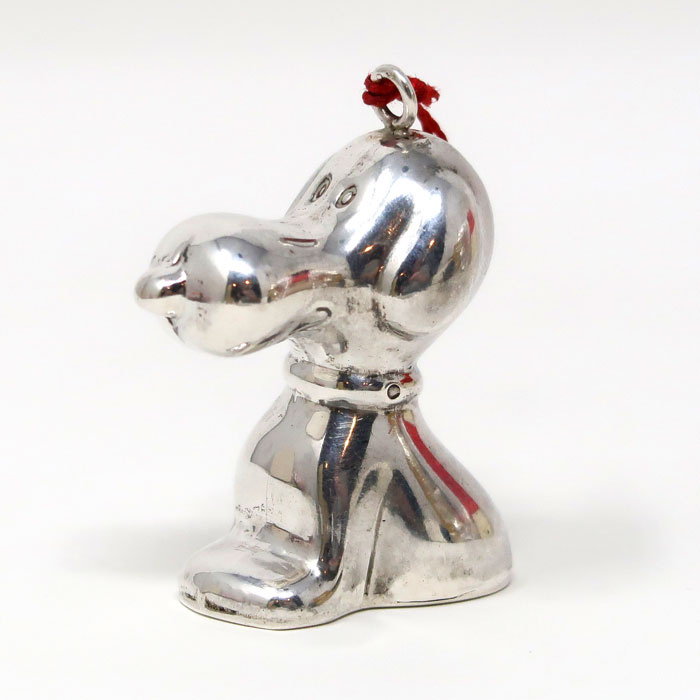
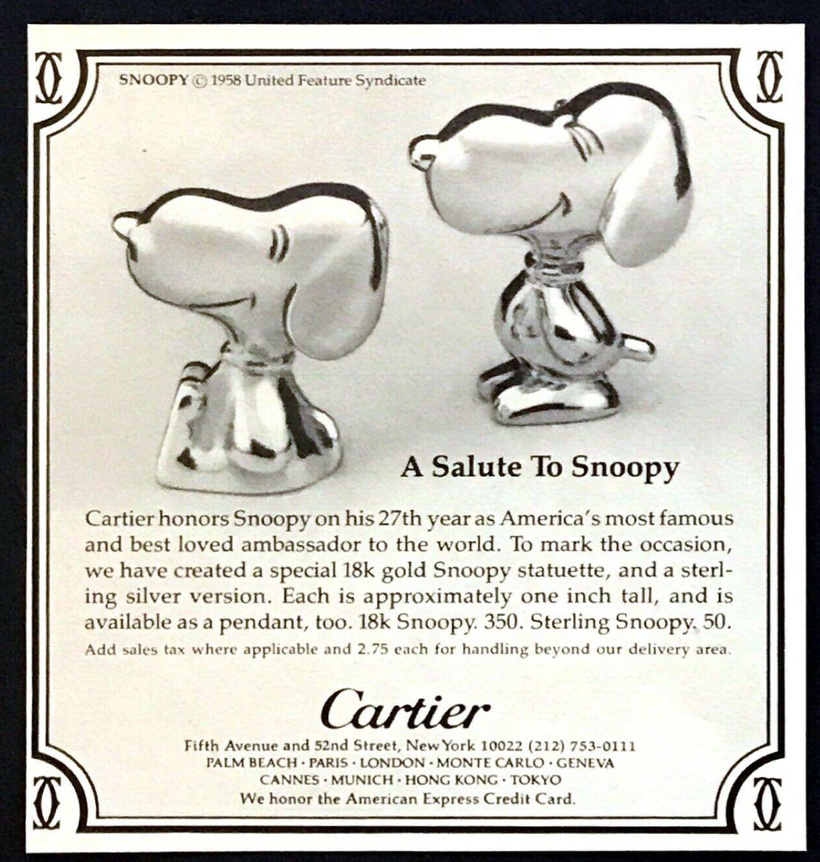
If you’re not familiar, Cartier, the famous luxury brand, made two Snoopy pendants in 1977. A standing Snoopy in solid gold and a sitting Snoopy in solid sterling silver. Check out this vintage Cartier ad for the pendants and figurines, also below. Adjusted for inflation, 18k Snoopy is $1853 and Sterling Silver is $264.
Finding Fakes
A recent eBay listing showed up for the Sitting Snoopy Cartier pendant. The main image caught my eye, especially when going through the rest of the images. Snoopy was sitting, but he was NOT the same Snoopy. Only the one image was faked. The rest of the images appear to be the actual pendant made by Cartier.
The “REAL” images below are pulled from Everything But The House. I am assuming this one is real as it’s from a reputable source and appears to be the same design as “Peanuts The Home Collection” by Freddi Margolin. Also, I looked at a lot of various listings to get a feel for what’s out there and what’s common among them.
The main difference between the real and fake are the poses. The REAL is a teddy bear pose. Snoopy is sitting with his legs out in front of him, with his arms hanging to his sides. The FAKE is a traditional dog pose. His front legs are straight while his back legs show the rounded haunches like a real dog. REAL is tilting his head up and has a smile ending with a dimpled cheek. FAKE is tilted downwards with a curled smile. While there’s many more differences, the last main difference is the hanger placement. REAL is parallel to his nose, while FAKE is perpendicular to his nose.
I also need to point out the bottom markings. The FAKE is very neat. The REAL shows the indentations of the stamp. Looking at many, many photos, these stamps are all very unique in how they pressed into the metal. They never look sharp and crisp like in the FAKE. Another thing to note is the orientations. The REAL example has it parallel to the side, while the FAKE is perpendicular. Also, the arrangement of the words is different. The copyright dates and United Feature are reversed. The FAKE word arrangement and direction is the same as the real photos in the same eBay listing. I have found other listings online with the same arrangement and direction. This might not be a red flag for fake. Instead, it may be a sign of multiple production runs, inconsistencies between crafts people, or a change in production mid-run.
Digging Deeper
Back to the FAKE photo. What in the world? Why would anyone make that? I think if this eBay seller was trying to produce a fake item, surely they wouldn’t have included the photos of the actual pendant. It does leave it open for the seller to send a pendant that looks like the FAKE, the seller complains, and eBay errs on the side of the seller since they used that photo. However, that would mean they would need to have the fakes made. I can’t find any evidence that the FAKE is an actual product. If you find it let me know.
I want to believe that this seller just errantly used an AI to give his product photos a little professionalism, however, he’s also using them on Etsy. Yes, there are now MORE AI generated photos.
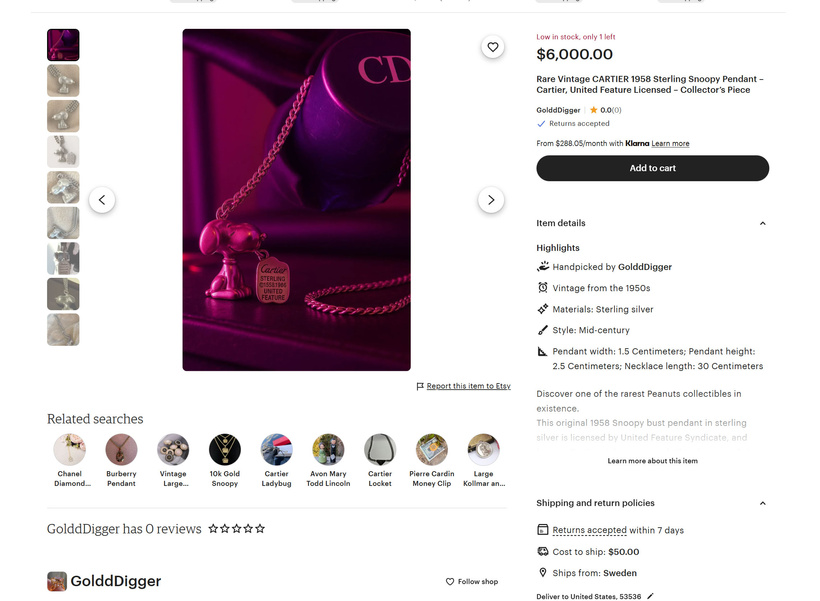
Nothing says AI generated like the bottom of the pendant being attached via his mouth? Also note, the original FAKE image has some definition between the back and front paws on the side. This does not. Different head title, no curl on the smile, different eyebrow, ear bump now on the front instead of back. The Copyright now says 1558.

Scammers trick – show both sides of an object by flipping the image. I love how this AI generation merging the real and fake poses into one glorious absurdity. Yes, these are their two separate photos put side by side.
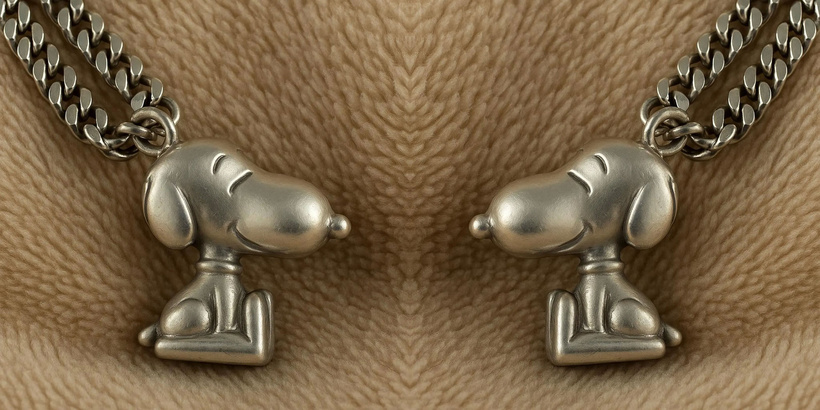
Fun Fact! I often write these WHILE researching. So suddenly, while writing, I came across the Etsy. I was going to put in here stuff about how maybe they just wanted a nice image because they’re bad at photography. Please remember, bad photography CANNOT be fixed with 100% AI Regeneration of your item. That’s fraud. Cut out your object and put it on an AI generated background – that’s fine. Recreate your object so it isn’t the same object and try to get $6000 for it? Criminal. I have notified Etsy and hope they make the right decision.
Note – the buyer of the original eBay item did leave feedback that they were happy and shared a photo that appears to be the real pendant. So, a hopefully happy ending.
The Beginning of a Wider Problem?
As always, it’s buyer beware out there! You need to stay safe and keep an eye out for inconsistencies. Today it’s a absurdly priced item that I would never, but tomorrow… maybe it’s something rare yet budget priced. AI slop turned into cheap knock-offs? You know it’s already happening, but will it also hit the vintage market?
Add to the Research
I do the best with what I have, but I could always use better sources. If you have more information on the Cartier pendants, please reach out. Also, if you come a listing passing off AI generated items as Peanuts vintage, please send it my way! Together we can keep collecting a safe and fun hobby for all Peanuts fans.
But wait, there’s more!
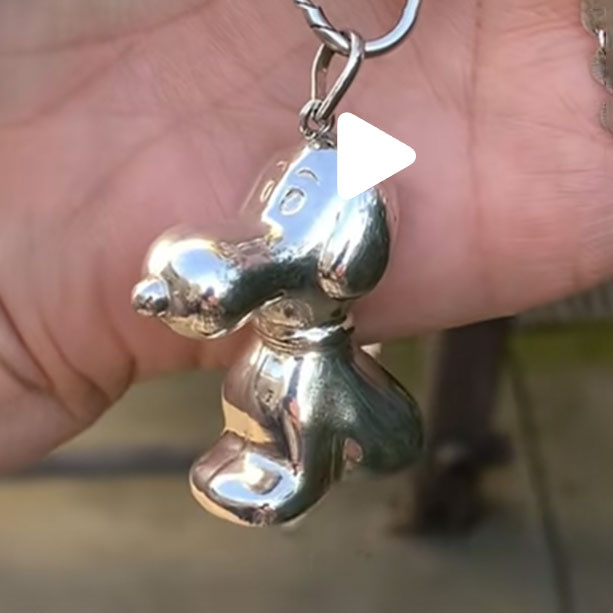
While doing a google image search for Snoopy Cartier Pendant, I came across a Tiktok video showing off a silver Snoopy necklace. However, it’s just a Determined Production Christmas ornament. Still rare, but not Cartier. The ornament is silver and will tarnish, unlike sterling silver. Also, it is hollow, not solid.
Image from the Tiktok.
The Christmas Ornament from Determined Productions. Photo by me.